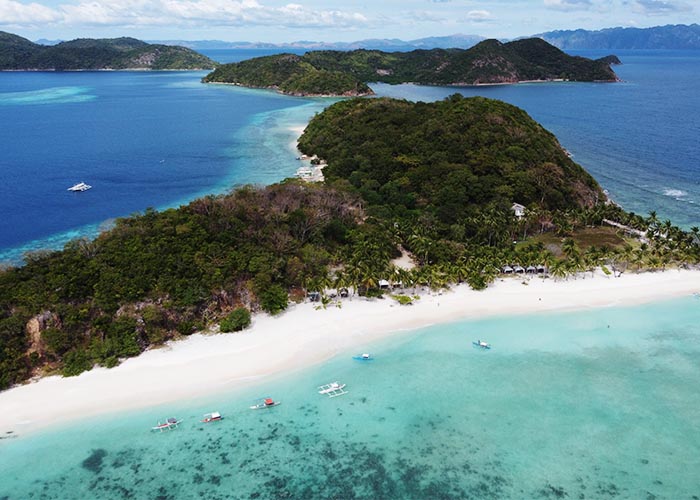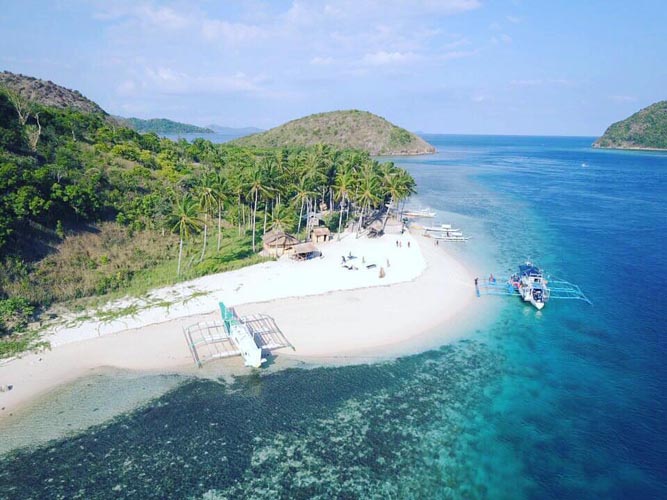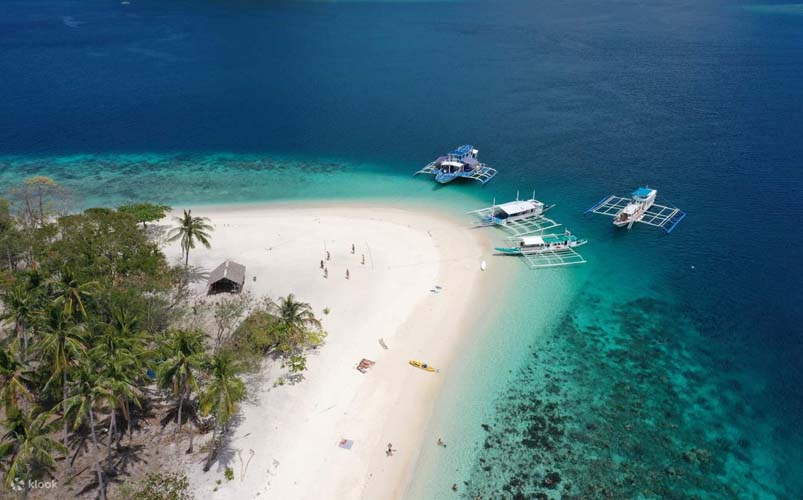
Bulog Dos Island
Location and Island-Hopping Access
Bulog Dos sits in the open sea roughly 35 kilometers south of Coron Town Proper, east of Culion Island.
Because it is located further out in the passage compared to the karst lagoons near Coron Island, reaching the islet takes approximately 1.5 to 2 hours by traditional motorized bangka outrigger boat.
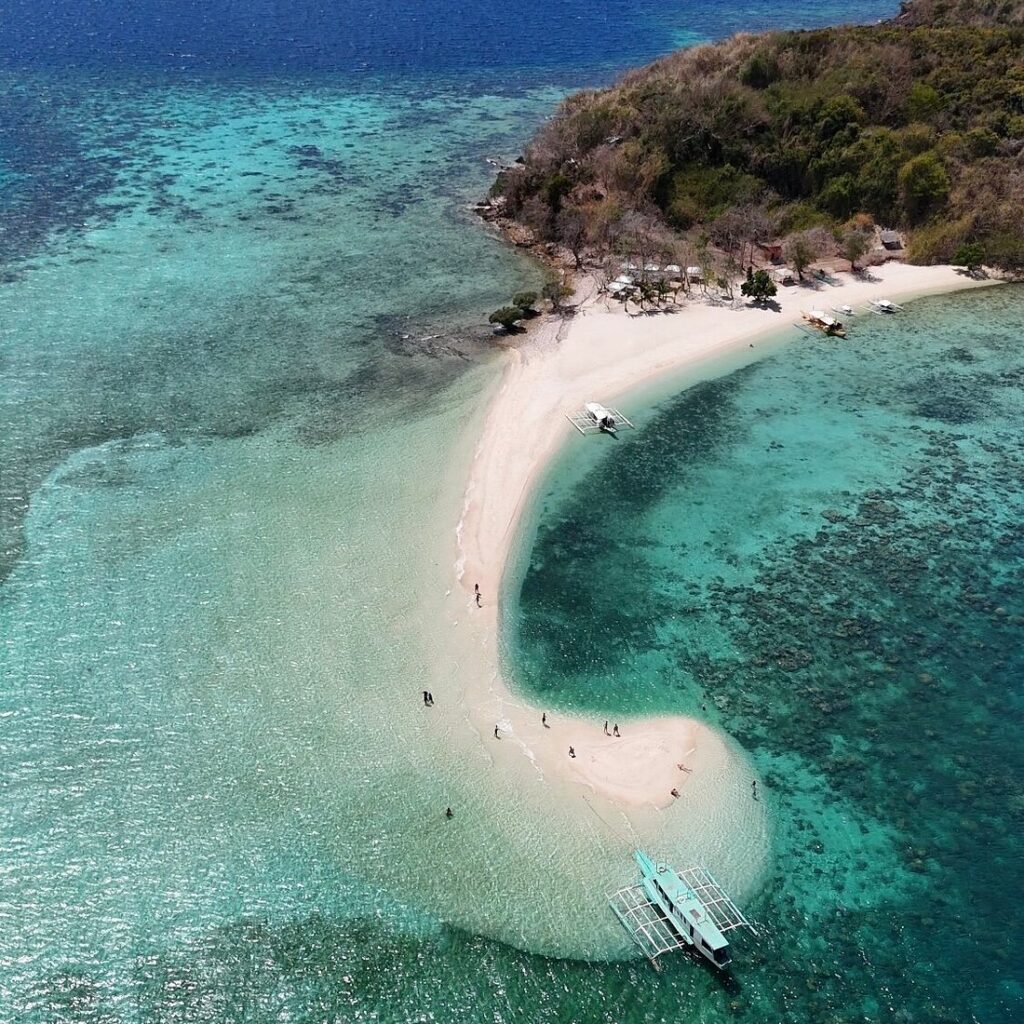
Bulog Dos is a flagship highlight of the popular Coron Island Escapade Tour. Tour operators routinely group it alongside nearby destinations like Malcapuya Island and Banana Island. Due to its shifting sandbar, boat captains often plan their visit around low tide, allowing travelers to walk along the exposed sand strip at its absolute best.
Indigenous Governance and History
Bulog Dos Island and its surrounding marine habitats fall within the ancestral territories stewarded in close partnership with the indigenous Calamian Tagbanwa people, one of the oldest ethnic groups in the Philippines.
- A Legacy of Maritime Ancestry: Anthropologists believe the Tagbanwa are descendants of the prehistoric Tabon Man, making them some of the earliest inhabitants of Palawan. Historically, the Calamian Tagbanwa adopted a sea-centric lifestyle, navigating the waters of Busuanga and Coron long before Spanish colonization.
- Ancestral Domain Stewardship: In 1998, the Tagbanwa made legal history in the Philippines by securing a Certificate of Ancestral Domain Title (CADT) over their traditional lands and ancestral waters.
- Cultural & Eco-Protection: While Bulog Dos directly borders private resort property on neighboring islets (such as the two-island chain connecting toward the Two Seasons Resort area), local indigenous guardians oversee the waters and public access points. User fees collected from visitors directly support environmental monitoring, marine conservation, and local tribal community programs.
Key Features for Tourists
Despite its compact size, Bulog Dos packs an incredible variety of landscapes into a small footprint:
- The Snake-like White Sandbar: The defining feature of Bulog Dos is its sweeping, powdery white sandbar that extends into the surrounding shallow sea. At low tide, visitors can walk along this narrow spit surrounded by clear, shallow water on both sides.
- Panoramic Viewpoint: On the higher end of the islet sits a short, rocky hill with a path leading to the top. A brief two-minute walk rewards travelers with 360-degree panoramic views overlooking the surrounding reef flats, neighboring islands, and the deep blue ocean passage.
- Snorkeling & Shallow Reefs: The clear, shallow waters surrounding the sandbar feature seagrass beds and coral heads teeming with reef fish, sea urchins, and starfish, making it an easy spot for a quick snorkel right off the shore.
- Waling-Waling Connection: Depending on tidal conditions, visitors can wade or swim across the narrow channel toward the adjacent Waling-Waling island strip to explore more of the connected reef.
Entrance Fees and Logistics
- Entrance Fee: 200 PHP per person.
- Tour Packages: For travelers joining an organized group Island Escapade Tour (typically ranging between 1,700 PHP and 2,000 PHP per person), entrance fees for Bulog Dos and its companion islands are usually bundled into the total package price.
- Private Boat Charters: If you charter a private boat, the 200 PHP entrance fee is paid directly to the local caretakers stationed at the island upon arrival.